
Colton Resident Lookup Records
A person-first search should choose a record by the question it can actually answer. The table below separates ownership, court, event, business, credential, and self-registration clues. It also shows where a result stops. A tax mailing address is not occupancy. A docket is not a complete history. An informational vital copy is not an authorized identity copy. A business address is not a home.
| Record | What it can confirm | Where | Access boundary |
|---|---|---|---|
| Assessor parcel | Ownership or tax-contact connection to land | County ARC | Free; mailing is not residence |
| Recorder index | Name tied to a recorded instrument | ARC Official Public Records | Index 1925 to present; image by office or order |
| Court docket | Party role, case chronology, public disposition | San Bernardino Superior Court | Remote and case-type limits apply |
| Vital record | Birth, death, marriage, or divorce event | County ARC, CDPH, or court | Informational and authorized rules differ |
| Business filing | Entity role, agent, filing history, business address | California bizfile | Business address is not a residence |
| Professional license | Credential, status, and public details | California DCA or board | Board-specific fields vary |
| My Voter Status | The requester's own registration status | California Secretary of State | Identity-gated; no third-party street browse |
Use two independent anchors before treating similar names as one person. The strongest matches usually combine a date and a place or a role and a relative, then return to the custodian for the actual record.
Two Anchors for a Colton Resident
Same-name confusion is the central risk in a Colton resident lookup. Begin with the exact spelling, then test middle names, initials, suffixes, maiden or married names, Spanish compound surnames with and without a hyphen, and common Anglicized forms. A single name match is weak. A name that also shares an APN, a spouse, an age range, an occupation, or a dated court location is stronger.
Use the following order when a person has a known address or property clue:
- Map the address to an APN and record the situs, mailing address, legal description, and assessment date.
- Search the recorder by current or prior party name, then compare the deed's legal description and recording date.
- Check a court party record or business filing for the same name, role, county, and time period.
- Use a vital, obituary, probate, directory, or license clue to test a relationship or event.
- Write down negative searches with the exact spelling and date. Absence is not proof that a person was never in Colton.
A clerk can explain how to search or order a record. A clerk should not be expected to confirm a private identity fact by phone.
Colton Court Lookup Fields
Colton trial matters go through San Bernardino Superior Court. The Court Access Portal is the first stop for public case information in civil, criminal, family, probate, small-claims, and traffic categories, subject to the court's remote-access rules. Search by case number when known. Otherwise use party or business name, date of birth when needed for disambiguation, case type, and filing-date range. Accept the portal terms before searching.
| Portal field | Type | Use | Limit |
|---|---|---|---|
| Case number | Text | Exact retrieval | Best when already known |
| Party or business name | Text | Find person or organization role | Try variants and expect same-name results |
| Date of birth | Date | Criminal-name disambiguation when required | Conditional field |
| Case type | Category | Narrow civil, criminal, family, probate, small claims, or traffic | Availability differs by category |
| Filing date range | Date pair | Reduce a common-name result set | Use the period supported by the portal |
The San Bernardino Court Access Portal entry gives the official route. The court's illustrated CAP search guide and file-viewing instructions explain courthouse and copy access. A public courthouse terminal may expose a document that Rule of Court 2.503 keeps from remote display. Archived files can require advance retrieval, and certified-copy fees follow the current court schedule.
Reading a Colton Court Docket
A court result is a case record, not a verdict about a person. The representative docket inventory can include case number, court location, filing date, case category, status, party names and roles, attorneys when public, register-of-actions events, hearing dates, dispositions, and a document list. Some images can be purchased or viewed remotely. Others require the courthouse that holds the file.
- Case number, filing date, location, category, and status
- Party names and roles such as plaintiff, defendant, petitioner, respondent, decedent, or attorney
- Register-of-actions dates, hearings, procedural events, and public disposition
- Document list, image availability, and courthouse-only access note
- Restrictions for juvenile, adoption, sealed, confidential, victim, or protected information
- Docket
- A chronological case record, often called the register of actions.
- Disposition
- The recorded outcome or status of a matter, read with the case type and later entries.
- Index versus image
- An index points to a record; an image or file contains the underlying document.
- Certified copy
- A custodian-issued copy with certification, distinct from a screen result or plain copy.
Federal cases sit in the Central District of California and are searched through PACER. The PACER federal case system can search party or case name, case number, court, and date. Federal documents can carry addresses but are subject to federal redaction rules and access charges.
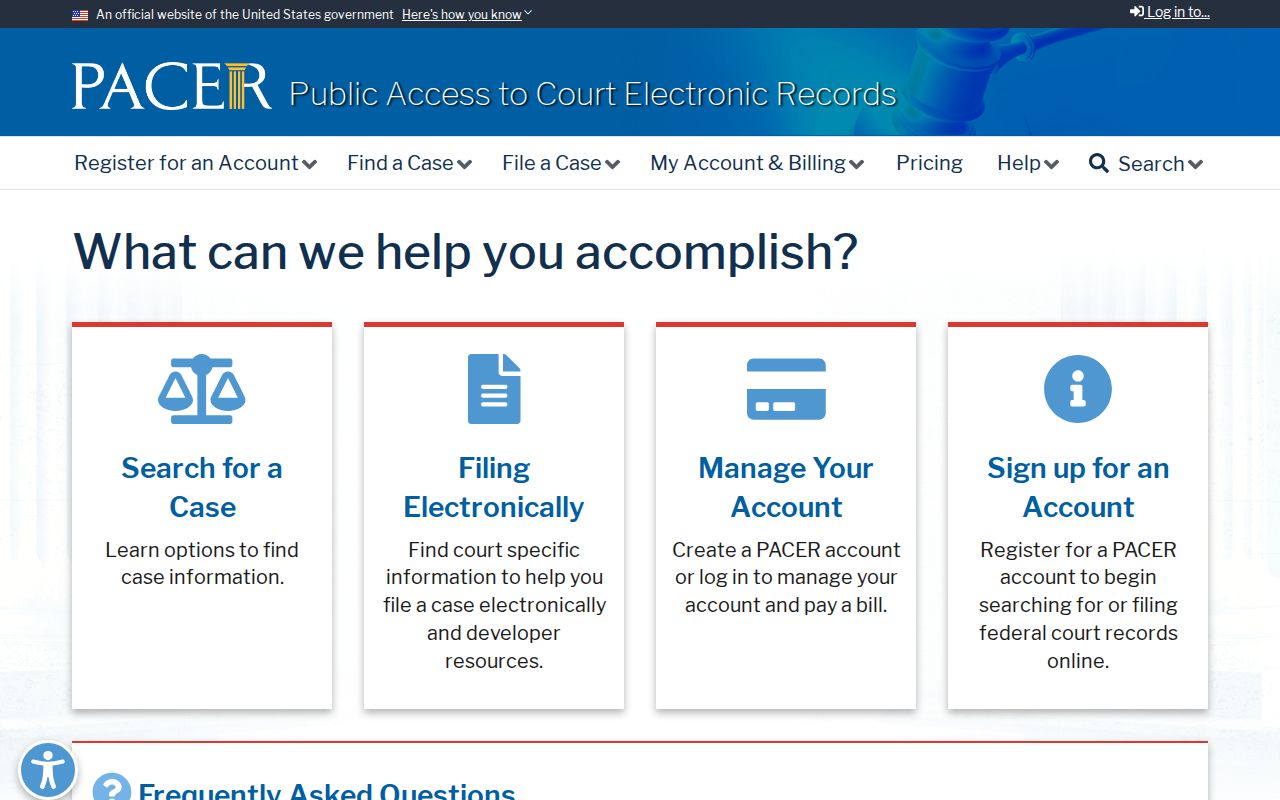
The PACER image is a reminder to label the court system beside every result. A federal party entry and a county case entry may describe different people with the same name.
Colton Property Lookup Roles
The county assessor's parcel result can show APN, situs, assessment owner or assessee when display is lawful, tax mailing address, legal description, assessed values, exemptions, and property characteristics. The recorder index can show a party to a deed, deed of trust, lien, release, notice, or map. Those records are strong for property and instrument roles. They do not list every occupant and do not prove that an owner receives mail at the parcel.
The practical person-first sequence is address to APN, APN to current parcel facts, parcel or current name to recorder index, and then a second source for identity. The Colton street directory explains the full address chain, including why a tax mailing address must remain a lead rather than a conclusion. For a resident lookup, copy only the fields that answer the question and keep the record date beside them.
| Field | Interpretation |
|---|---|
| Situs address | Physical parcel location |
| Tax mailing address | Destination for assessment correspondence |
| Deed grantee | Party receiving an interest in the recorded instrument |
| Permit applicant | Person or entity tied to a municipal project file |
Colton Business Lookup Trails
A business role can disambiguate a name without claiming that the business address is a home. California Secretary of State bizfile searches entity name or number and can expose status, entity type, formation or registration date, jurisdiction, principal or mailing addresses, agent for service, filing events, and free PDF documents. An account is needed to file statements or order certificates. County fictitious business name records can add a trade-name registrant, while local permit files can connect a contractor or business to a Colton project.
The Department of Consumer Affairs umbrella search can verify a license number, profession, status, issue or expiration information, and public discipline or address fields when the board provides them. Match the license number and status rather than a name alone. The California bizfile search is the business source, UCC filings have separate debtor and secured-party modes, and DCA license search is the credential source.
Read an entity result as organizational evidence. A registered agent, principal office, or contractor address can be historical or shared. It becomes a useful second anchor only when the name, date, role, and separate local record agree.
Colton Vital Records Lookup
California vital-record access depends on record type and copy type. An informational certified copy is generally available for many birth, death, and public-marriage requests but is marked not valid for identity. An authorized certified copy is limited to listed relationships and roles under Health and Safety Code sections 103525 and 103526. Mailed authorized requests require a notarized sworn statement. Confidential marriage copies are restricted to spouses or a court order under Family Code section 509.
| Record | Custodian for a Colton event | 2026 fee or rule |
|---|---|---|
| Birth | County recorder, local registrar, or CDPH | $31; authorized copy category and notarized VS 20 when mailed |
| Death | County recorder, local registrar, or CDPH | $26; informational and authorized paths differ |
| Public marriage | County recorder where licensed or CDPH | $19; authorized categories apply |
| Confidential marriage | Issuing county clerk | Spouses or court order; county fee |
| Divorce | Superior Court decree; CDPH certificate for limited years | CDPH certificate fee $18; decree comes from court |
The CDPH vital-record application forms cover birth, death, marriage, and dissolution requests. The state's vital-record fee page is the current fee check, the county registrar directory explains which local office may hold an event, and the birth-copy instructions describe coverage and mail requirements. CDPH birth records begin in July 1905. Payment is by check or money order to CDPH Vital Records, drawn on a U.S. bank. If no record is found, the search fee is retained and a Certificate of No Public Record is issued.
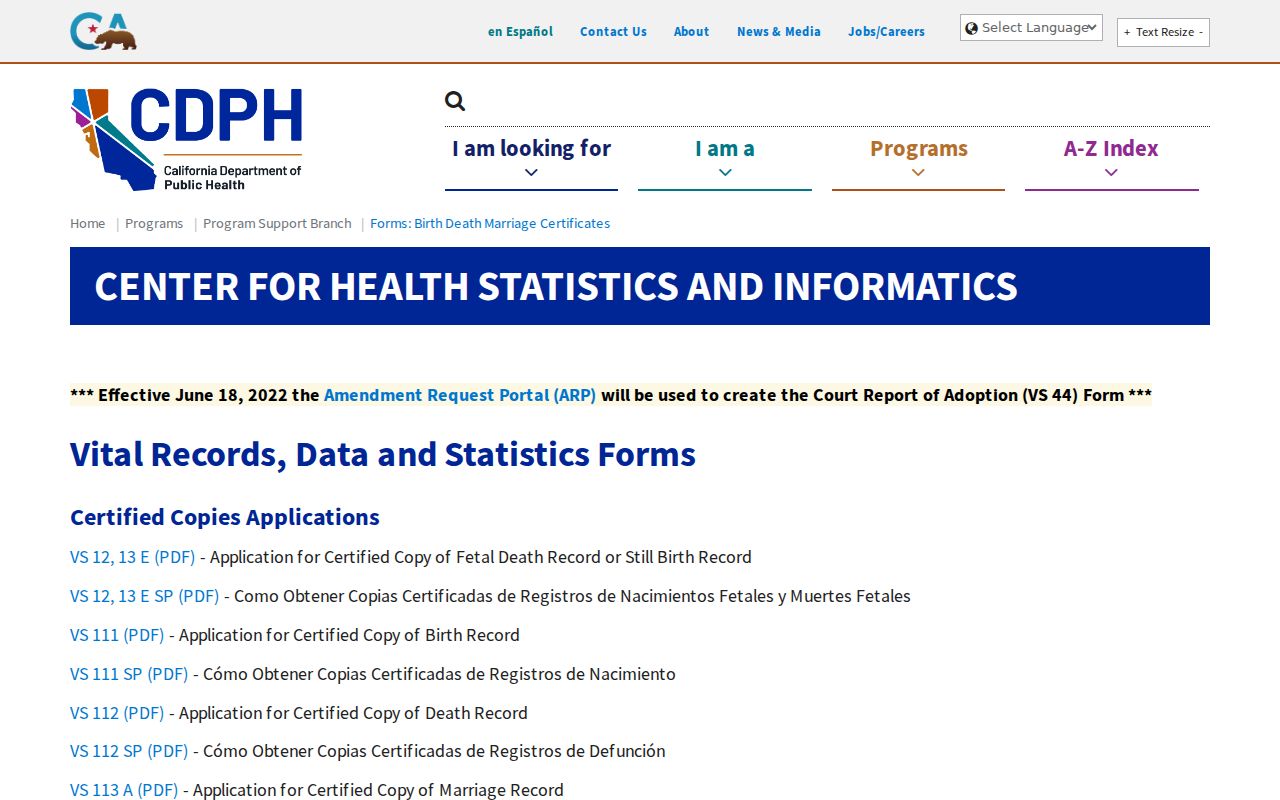
Use a vital record to confirm an event or relationship only within the eligibility rules. Adoption and sealed records remain confidential.
Colton Probate and Family Links
Probate is often useful when the goal is to reconnect an heir with an older Colton address. Petitions and notices can list relatives, addresses, decedent details, and the role of an executor or trustee. Read each item as a filing claim unless a later order or disposition supports it. Recorded successor or trustee deeds can then connect the probate trail to a parcel without assuming that every named relative lived there.
Obituaries, church registers, yearbooks, and business records can add the human link. The California Room documents local newspaper microfilm and directory holdings. First Presbyterian Church runs discovered in genealogy catalogs cover portions of 1880 to 1970. Exact Colton yearbook or alumni holdings were not verified. The historical collection details sit on the Colton city directory page, while the current record check belongs here.
For birth-parent or adoption questions, use California Department of Social Services mutual-consent and court procedures. The State Controller's unclaimed-property search can supply a reported name and location clue, but a claimant must prove identity or relationship. Sealed records are not a problem to solve through a name search. The lawful route depends on the record type and the person's eligibility.
Colton Voter Lookup Limits
California My Voter Status is an identity-gated self-lookup. It can return registration status, party preference, voting districts, polling information, vote-by-mail status, and voting history where available for the matched voter. It does not let a visitor search another person's name, address, or street. Voter-file release under Elections Code section 2194 is limited to election, scholarly, journalistic, political, or governmental purposes, with a state or county request and security obligations.
Government Code section 7924.000 protects street home address, phone, email, precinct and registration numbers, prior registration, driver's license or ID, Social Security number, and signature, except for authorized release. The county elections contact directory can route a registration question. Safe at Home and designated confidential voters are excluded. A voter-data gap is therefore a legal boundary, not an invitation to infer registration from an assessor parcel.
Use a resident lookup lawfully. Name research in Colton is appropriate for family history, heirs, identity correction, civic records, and careful reconnection. Do not use a record trail to stalk, harass, intimidate, or harm a person.
For a registration error, use elections officials or My Voter Status. For a wrong deed or assessment fact, contact ARC. A public-records request obtains an existing record, but it does not override voter, court, vital, or confidentiality rules.
Colton Resident Lookup Limits
A right-person result is a chain of dated facts, not a single search-screen answer. A court name can be a clue. An owner name can be a tax or title role. A directory entry can be a listed adult in one year. A business or license record can describe an office role. The record custodian decides whether a copy is public, informational, authorized, sealed, or protected.
When an online path fails, use the correct fallback. Visit the courthouse for a public file barred from remote display. Ask ARC about an index or copy request. Send the City Clerk a narrow CPRA request for an existing municipal file. Use a library or archive for directories and newspapers. Record-specific locators such as the CDCR incarcerated-records search should be read only within their stated custody purpose. Keep the date, URL, source title, search spelling, and result fields in research notes.
The Colton City Clerk CPRA form asks for the record type, date range, location, and whether inspection or copies are wanted. California's CPRA generally calls for an agency determination within ten days, with a possible fourteen-day unusual-circumstances extension. The agency need not create a new list of residents.